
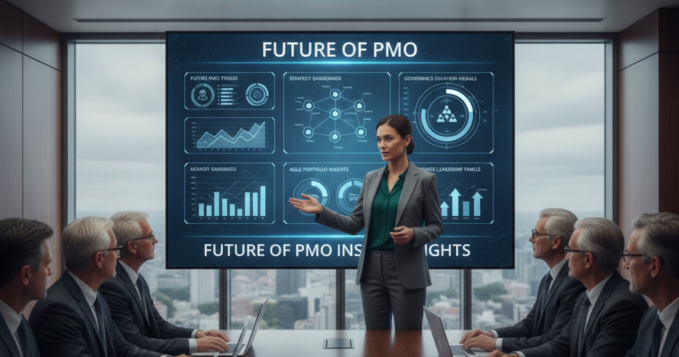
The future of PMO is changing rapidly as organizations expect more value, more insight, and more strategic contribution from their project management offices. In the past, many PMOs focused mainly on templates, reporting cycles, governance meetings, and administrative coordination. Those responsibilities still matter, but they are no longer enough on their own. Business leaders increasingly want PMOs that can support prioritization, improve delivery confidence, provide meaningful portfolio insight, strengthen organizational change, and help align projects to strategic goals. As expectations rise, the future of PMO becomes less about process ownership alone and more about organizational impact.
This shift is happening because project environments are becoming more complex. Organizations are managing digital transformation, regulatory pressure, resource constraints, changing stakeholder expectations, and faster decision cycles. In that environment, PMOs cannot remain static. The future of PMO depends on its ability to evolve from a support function into a more adaptive, data-aware, and business-connected capability. PMOs that continue to focus only on status collection may struggle to remain relevant, while those that build strategic value are more likely to become essential.
Understanding the future of PMO is important for leaders, PMO teams, and project professionals alike. It helps organizations prepare for what the PMO needs to become, not just what it has been historically. The most effective PMOs of the future are likely to be more integrated with business strategy, more responsive to change, and more capable of turning delivery information into practical leadership insight.
If your organization is also reviewing current capability, our PMO maturity model guide can help support a clearer view of where your PMO is today and how it can evolve.
Why the Future of PMO Matters
The future of PMO matters because organizations are increasingly asking whether their PMO is adding real value. A PMO that only tracks updates may not be enough in an environment that demands stronger strategic alignment, faster insight, and more flexible delivery support.
Without adapting to the future of PMO, organizations often face:
- outdated PMO services
- limited portfolio insight
- weak strategic influence
- low stakeholder confidence
- poor adaptability to change
- disconnected governance
- insufficient data for decision making
- reduced long-term PMO relevance
By contrast, PMOs that evolve can become more credible and more valuable. If your team is also improving strategic execution, our project alignment strategies guide can help connect PMO evolution with broader business goals.
1. PMOs Will Become More Strategic
One of the biggest shifts in the future of PMO is a stronger move toward strategic support. PMOs are increasingly expected to help leadership understand which initiatives matter most and how delivery supports business priorities.
Strategic PMO activity may include
- portfolio prioritization
- strategic reporting
- business case support
- benefit visibility
- investment insight
Why this matters
A more strategic PMO is better positioned to influence decisions and demonstrate value.
2. Data-Driven Decision Support Will Grow
The future of PMO will rely much more heavily on data. PMOs are moving beyond collecting status updates and toward using data to support forecasting, trend analysis, and proactive decision making.
This may include
- KPI dashboards
- performance analytics
- risk trends
- capacity analysis
- forecasting support
Why this matters
Stronger data capability helps PMOs provide insight rather than just information.
3. Agile and Hybrid Delivery Support Will Expand
The future of PMO is closely connected to agile and hybrid delivery environments. PMOs must support different delivery models rather than applying one rigid framework to all work.
Support may include
- agile reporting standards
- hybrid governance approaches
- flexible portfolio oversight
- sprint visibility
- cross-method coordination
Why this matters
PMOs stay relevant when they support how teams actually deliver.
4. PMOs Will Play a Bigger Role in Change Management
As organizations deliver more transformation work, the future of PMO includes stronger involvement in change readiness, stakeholder adoption, and implementation support.
This may involve
- change impact visibility
- stakeholder readiness tracking
- adoption reporting
- communication support
- transition oversight
Why this matters
Projects only create value when change is adopted, not just delivered.
For broader professional guidance, the Project Management Institute offers useful resources on PMO evolution, governance, and delivery capability.
5. Governance Will Become Smarter, Not Heavier
The future of PMO does not mean more bureaucracy. Instead, successful PMOs will create governance that is proportionate, visible, and useful. Leaders want better oversight without unnecessary friction.
Smarter governance may include
- targeted governance forums
- better escalation discipline
- clear decision rights
- focused reporting
- risk-based assurance
Why this matters
Governance adds more value when it improves clarity without slowing delivery.
6. Resource and Capacity Visibility Will Matter More
The future of PMO will involve stronger attention to resource planning, delivery capacity, and portfolio demand. Organizations need better visibility of whether they can actually deliver what they approve.
This may include
- capacity dashboards
- demand tracking
- allocation analysis
- resource conflict visibility
- prioritization support
Why this matters
Better resource insight improves realism across the portfolio.
7. PMOs Will Need Stronger Digital Tooling
The future of PMO depends partly on better use of tools and technologies. PMOs that rely on disconnected spreadsheets and manual consolidation may struggle to keep pace with growing complexity.
Better tooling may support
- automated dashboards
- portfolio visibility
- integrated reporting
- workflow tracking
- document control
- data consistency
Why this matters
Technology helps PMOs scale visibility and reduce manual effort.
8. Benefit Realization Will Become More Important
The future of PMO is not only about delivering projects. It is also about showing whether those projects create the intended business outcomes. Benefit realization will become more central.
Benefit-focused PMOs may support
- benefit tracking
- post-implementation review
- adoption monitoring
- value reporting
- outcome visibility
Why this matters
Organizations increasingly want proof of value, not only evidence of activity.
If your organization is also improving outcome measurement, our project performance metrics guide can help support stronger performance visibility.
9. Stakeholder-Centered PMOs Will Be More Effective
The future of PMO includes better stakeholder engagement. PMOs need to understand what leaders, delivery teams, sponsors, and business units actually need from them.
Stakeholder-centered PMO practices may include
- clearer service definition
- regular stakeholder feedback
- more useful reporting
- tailored governance support
- better communication discipline
Why this matters
PMOs gain credibility when they are seen as useful rather than procedural.
10. Continuous Improvement Will Define Mature PMOs
The future of PMO belongs to teams that keep improving. PMOs cannot assume that once processes are defined, they will remain effective forever.
Continuous improvement may include
- maturity reassessment
- lessons learned integration
- reporting refinement
- governance review
- service redesign
Why this matters
Continuous improvement helps PMOs stay aligned with changing business needs.
11. The PMO Will Be Judged More by Value Than Activity
The final trend shaping the future of PMO is a stronger expectation that PMOs show practical organizational value. Activity alone will not be enough.
Value may be demonstrated through
- better decision support
- stronger delivery visibility
- improved prioritization
- reduced delivery risk
- clearer portfolio insight
- stronger strategic alignment
Why this matters
PMOs remain sustainable when leadership sees clear value in their contribution.
How to Prepare for the Future of PMO
Organizations should not wait for pressure to build before reviewing the future of PMO. Proactive development is more effective than reactive restructuring.
Useful preparation steps include
- assess current PMO maturity
- clarify stakeholder expectations
- review PMO services
- strengthen reporting insight
- invest in useful tooling
- align PMO work with business priorities
Why this matters
Preparation helps PMOs evolve deliberately rather than defensively.
Common Mistakes When Thinking About the Future of PMO
Even capable organizations can misread the future of PMO through avoidable assumptions.
Assuming more process means more maturity
The future PMO needs usefulness, not just documentation.
Ignoring business expectations
A PMO must evolve in line with organizational needs.
Treating agile as outside PMO scope
Modern PMOs need to support different delivery models.
Focusing only on reporting activity
Insight matters more than status volume.
Waiting too long to adapt
PMOs lose relevance when they evolve too slowly.
Best Practices for Building a Future-Ready PMO
Teams usually strengthen the future of PMO when they apply a few disciplined habits.
Stay connected to strategy
The PMO should support business priorities.
Use data intelligently
Insight creates more value than raw reporting.
Keep governance practical
Oversight should help delivery, not burden it.
Improve continuously
Strong PMOs evolve over time.
Focus on visible value
Long-term credibility depends on usefulness.
Future of PMO Checklist
Use this checklist to prepare for the future of PMO:
- strengthen strategic support
- improve data-driven decision capability
- support agile and hybrid delivery
- integrate change management more effectively
- make governance smarter and more proportionate
- improve resource and capacity visibility
- strengthen PMO tools and technologies
- focus more on benefit realization
- improve stakeholder-centered service design
- build continuous improvement into PMO operations
- demonstrate clear organizational value
This checklist helps make future of PMO planning more practical, visible, and actionable.
Final Thoughts
The future of PMO is not about abandoning governance or project discipline. It is about evolving those capabilities so they remain relevant in a faster, more complex, and more strategically demanding environment.
The strongest PMOs of the future will be more adaptive, more data-driven, more stakeholder-focused, and more connected to business value. They will still provide structure and oversight, but they will also help leadership make better decisions and help organizations realize more value from delivery. When organizations understand and prepare for the future of PMO, they give the PMO a far stronger chance of remaining credible and essential.
Frequently Asked Questions
What is the future of PMO
The future of PMO refers to how project management offices are evolving to provide more strategic support, better data insight, stronger governance, and greater organizational value.
Why is the future of PMO changing
It is changing because organizations expect PMOs to do more than administrative reporting. They want better decision support, strategic alignment, agility, and value visibility.
Will PMOs still be relevant in the future
Yes. PMOs can remain highly relevant if they evolve to support business priorities, delivery insight, adaptive governance, and organizational change.
How can a PMO prepare for the future
A PMO can prepare by assessing maturity, improving reporting quality, supporting agile and hybrid delivery, strengthening tools, and focusing more on business value.
What skills will future PMOs need
Future PMOs will need stronger skills in data analysis, strategic alignment, stakeholder engagement, change support, governance design, and portfolio insight.