
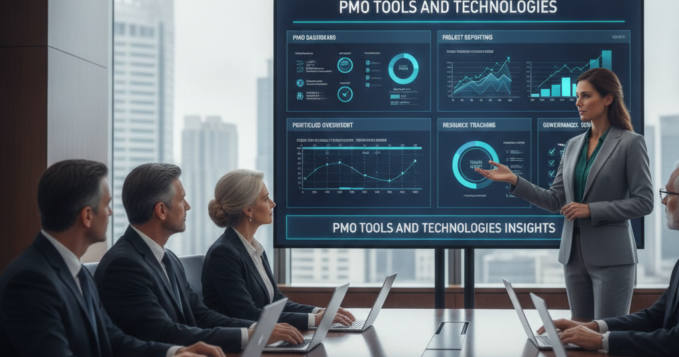
PMO tools and technologies help organizations improve project oversight, reporting quality, governance visibility, and delivery coordination across multiple initiatives. As project environments become more complex, PMOs are expected to do more than maintain templates and collect status updates. They are often responsible for portfolio visibility, risk escalation, reporting consistency, resource oversight, governance support, and decision-making insight. Without the right tools, those responsibilities become harder to manage at scale.
The best PMO tools and technologies give project offices a more reliable way to collect data, monitor delivery health, standardize reporting, and support leadership decision making. Some tools are designed for project planning and task control, while others focus on dashboards, collaboration, document management, portfolio management, financial visibility, or resource capacity. The right mix depends on the maturity of the PMO, the scale of delivery, and the type of oversight the organization needs.
Strong PMO tools and technologies should improve visibility without creating unnecessary administrative burden. A good PMO environment is not built on software alone, but the right technology can make governance faster, reporting clearer, and delivery performance easier to track. When chosen well, these tools help PMOs move from manual coordination toward more strategic support for the business.
If your organization is also strengthening governance, our project governance best practices guide can help connect PMO tooling with stronger oversight and accountability.
Why PMO Tools and Technologies Matter
PMO tools and technologies matter because PMOs often sit at the center of project visibility and control. They need dependable systems that help gather information, standardize delivery data, and support informed decisions across projects and programs.
Without strong PMO tools and technologies, organizations often face:
- inconsistent reporting
- weak portfolio visibility
- poor resource oversight
- manual data consolidation
- unclear governance tracking
- limited risk visibility
- slower decision support
- reduced stakeholder confidence
By contrast, the right technology improves control and helps PMOs operate more effectively. If your team is also improving performance visibility, our project performance metrics guide can help support stronger measurement alongside better tooling.
1. Microsoft Project
Microsoft Project is one of the most widely recognized PMO tools and technologies for scheduling, planning, and milestone management. It is especially useful for structured project environments that need detailed timelines and dependency control.
Microsoft Project supports
- project scheduling
- task dependencies
- milestone tracking
- baseline management
- resource planning
Why this matters
It helps PMOs maintain more disciplined planning across delivery work.
2. Power BI
Power BI is one of the most useful PMO tools and technologies for reporting and dashboard visibility. It can turn project data into visual insights for sponsors, governance groups, and PMO leaders.
Power BI helps with
- dashboard reporting
- KPI visualization
- portfolio visibility
- trend analysis
- executive reporting
Why this matters
PMOs benefit when reporting becomes faster, clearer, and easier to interpret.
3. Jira
Jira is one of the PMO tools and technologies often used in agile and hybrid environments. It helps teams track work, manage backlogs, and monitor sprint-based delivery.
Jira supports
- agile workflow tracking
- sprint visibility
- issue management
- backlog prioritization
- team coordination
Why this matters
It helps PMOs oversee agile delivery more effectively.
4. Smartsheet
Smartsheet is one of the PMO tools and technologies that combines planning, reporting, and collaboration in a flexible spreadsheet-style environment.
Smartsheet may support
- project tracking
- reporting templates
- portfolio views
- collaboration
- workflow automation
Why this matters
It is useful for PMOs that want flexibility without heavy technical complexity.
For broader professional guidance, the Project Management Institute offers useful resources on PMO maturity, governance, and project management standards.
5. Monday.com
Monday.com is one of the PMO tools and technologies that offers highly visual work management and dashboard capability. It can help PMOs track projects, actions, and status across teams.
Monday.com may help with
- status tracking
- visual dashboards
- task coordination
- workflow visibility
- team updates
Why this matters
A visual platform can improve adoption and make reporting easier to understand.
6. Asana
Asana is one of the PMO tools and technologies used for work coordination, project tracking, and collaboration across functional teams.
Asana supports
- task management
- progress tracking
- work coordination
- collaboration
- timeline views
Why this matters
It can help PMOs improve visibility in fast-moving delivery environments.
7. Confluence
Confluence is one of the PMO tools and technologies that supports documentation, knowledge sharing, and governance records. PMOs often need a central place for standards, meeting notes, and project information.
Confluence may support
- PMO documentation
- decision records
- meeting notes
- project knowledge sharing
- governance reference material
Why this matters
Documentation quality improves when information is stored consistently and accessibly.
8. SharePoint
SharePoint is one of the PMO tools and technologies widely used in enterprise environments for document management, collaboration, and structured information sharing.
SharePoint helps with
- document repositories
- governance libraries
- template storage
- permission control
- team collaboration
Why this matters
PMOs benefit from reliable access to documents, templates, and records.
9. Tableau
Tableau is one of the PMO tools and technologies designed for advanced data visualization and reporting. It helps PMOs present portfolio information in more powerful visual formats.
Tableau may support
- visual analytics
- portfolio reporting
- trend analysis
- executive dashboards
- data storytelling
Why this matters
Stronger visuals improve understanding at leadership level.
10. Resource Management Tools
Many PMOs need dedicated resource visibility. Resource planning platforms are important PMO tools and technologies when teams must track capacity and allocation across projects.
Resource tools may support
- capacity planning
- allocation visibility
- demand forecasting
- utilization tracking
- conflict identification
Why this matters
Resource clarity helps PMOs support more realistic planning.
If your organization is also improving prioritization, our project prioritization frameworks guide can help connect demand planning with better portfolio decisions.
11. Integrated PPM Platforms
Portfolio and project management platforms are among the most comprehensive PMO tools and technologies because they combine planning, governance, financial oversight, and portfolio control in one system.
Integrated PPM platforms may support
- portfolio tracking
- governance workflows
- financial visibility
- project intake
- resource planning
- reporting standardization
Why this matters
Integrated platforms can reduce fragmentation and strengthen end-to-end PMO visibility.
How to Choose the Right PMO Tools and Technologies
Not every PMO needs the same technology stack. The right PMO tools and technologies depend on the size of the organization, delivery complexity, reporting needs, and PMO maturity.
Useful selection questions include
- does the tool support portfolio visibility
- can it improve reporting quality
- does it fit current delivery methods
- can stakeholders use it easily
- does it reduce manual work
- can it integrate with existing systems
Why this matters
The best tools support real PMO outcomes rather than creating extra complexity.
Common Mistakes When Choosing PMO Tools
Even capable organizations can reduce value through avoidable technology mistakes.
Choosing tools based only on features
The best tool is the one that fits practical delivery needs.
Ignoring adoption
If project teams do not use the tool properly, visibility will remain weak.
Using too many disconnected tools
Fragmentation often creates more manual work, not less.
Expecting tools to fix weak governance alone
Technology supports discipline, but it does not replace it.
Failing to review reporting usefulness
PMO dashboards should support action, not only look attractive.
Best Practices for PMO Technology Use
Teams usually get stronger results from PMO tools and technologies when they apply a few disciplined habits.
Keep reporting practical
Reports should support decisions, not just activity.
Standardize core data
Consistency improves control.
Focus on visibility and usability
A useful tool must be understandable.
Integrate where possible
Connected systems reduce duplication.
Review effectiveness regularly
PMO tooling should evolve with business needs.
PMO Tools and Technologies Checklist
Use this checklist to improve PMO tools and technologies:
- select tools that improve project and portfolio visibility
- support reporting and dashboard clarity
- improve governance and document control
- strengthen resource visibility
- reduce manual consolidation effort
- support collaboration across teams
- integrate systems where practical
- improve data consistency
- review adoption across stakeholders
- refine the toolset as PMO maturity grows
This checklist helps make PMO tools and technologies more practical, effective, and aligned with real oversight needs.
Final Thoughts
PMO tools and technologies are essential because modern PMOs need more than spreadsheets and disconnected updates to support effective oversight. The right technology can improve reporting, resource visibility, governance control, and leadership decision making across projects and programs.
The best PMO tools and technologies are not necessarily the most complex. They are the ones that improve visibility, reduce manual effort, and support the specific control needs of the organization. When chosen and used well, these tools help PMOs become more efficient, more credible, and more strategically valuable.
Frequently Asked Questions
What are PMO tools and technologies
PMO tools and technologies are software platforms and systems used by project management offices to improve reporting, governance, portfolio visibility, resource oversight, and delivery control.
Why are PMO tools and technologies important
They are important because they help PMOs standardize data, improve visibility, reduce manual reporting effort, and support stronger decision making.
What are examples of PMO tools and technologies
Examples include Microsoft Project, Power BI, Jira, Smartsheet, Monday.com, Asana, Confluence, SharePoint, Tableau, resource management tools, and integrated PPM platforms.
How do PMOs choose the right tools
PMOs choose the right tools by assessing reporting needs, governance requirements, delivery methods, user adoption, integration capability, and portfolio complexity.
Do PMO tools replace governance processes
No. PMO tools support governance and visibility, but they do not replace leadership discipline, accountability, or delivery control.