
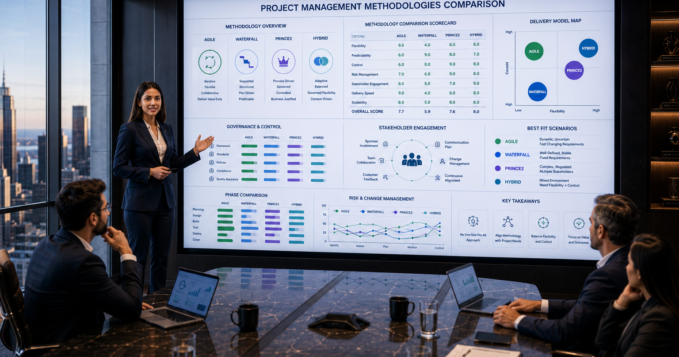
Project management methodologies comparison is essential for teams that want to choose the right delivery approach instead of relying on habit, trend, or incomplete understanding. Many organizations use terms like agile, waterfall, PRINCE2, hybrid, and PMP interchangeably, but they are not the same kind of thing. Some are delivery methodologies, some are governance frameworks, and some are certifications that validate knowledge rather than define how a project should actually run. That confusion can lead teams to select the wrong approach or compare options unfairly.
A useful project management methodologies comparison should help clarify what each method is designed to do, where it works well, and what kind of project environment it supports best. A methodology affects how work is planned, how change is handled, how stakeholders are involved, how reporting is structured, and how control is maintained during execution. When the approach fits the project, delivery tends to feel more stable and practical. When the fit is poor, teams often experience friction, unnecessary process overhead, weak flexibility, or governance problems.
This is why it is so important to compare methodologies properly. The goal is not to decide that one method is universally best. The goal is to understand which approach fits the project’s level of uncertainty, governance needs, stakeholder expectations, and team capability. A smart methodology choice improves how the project works every day.
If your team is also deciding how to select the best model from the start, our choosing the right project management methodology guide can help you make a more structured decision.
Why a Project Management Methodologies Comparison Matters
A project management methodologies comparison matters because different approaches solve different delivery problems. Some methods support predictability and control. Others support flexibility and feedback. Some provide a full delivery structure, while others mainly offer governance principles. If teams compare them badly, they may choose a method for the wrong reasons.
Without a strong project management methodologies comparison, organizations often face:
- confusion between methods and certifications
- poor methodology fit
- overcomplicated project controls
- weak adaptability
- misaligned stakeholder expectations
- unnecessary process overhead
- lower team efficiency
- avoidable delivery issues
By contrast, a thoughtful comparison helps organizations choose more deliberately. If your PMO is also improving governance choices, our project governance models guide can help connect methodology decisions with stronger oversight.
1. Understand That Methodologies and Certifications Are Not the Same
One of the biggest reasons a project management methodologies comparison becomes confusing is that people often mix up delivery methodologies with professional certifications.
For example
- Agile is a delivery approach
- Waterfall is a sequential delivery model
- PRINCE2 is a structured project management method
- PMP is a certification from PMI, not a methodology itself
Why this matters
If you compare a certification against a methodology, the decision becomes inaccurate from the start.
2. Waterfall Works Best for Predictable, Structured Delivery
Waterfall is one of the most widely recognized approaches in any project management methodologies comparison. It works through sequential phases such as requirements, design, build, test, and deploy.
Waterfall is often best when
- requirements are stable
- stage-based approvals are needed
- documentation is important
- change is expected to be limited
- compliance or traceability matters
Why this matters
Waterfall provides clarity and structure when predictability is a priority.
3. Agile Works Better When Requirements Evolve
Agile is another major part of any project management methodologies comparison. It is built around iterative delivery, regular feedback, and flexibility.
Agile is often best when
- user feedback is important
- scope may change during delivery
- incremental value can be released
- teams collaborate closely
- learning needs to happen during execution
Why this matters
Agile helps teams adapt instead of locking everything too early.
4. PRINCE2 Brings Structured Governance and Roles
PRINCE2 is important in a project management methodologies comparison because it provides a highly structured project management method with clear roles, controls, and stage boundaries.
PRINCE2 is often useful when
- governance discipline is important
- formal roles and responsibilities are needed
- projects require stage-based control
- documentation and business justification matter
- leadership wants defined oversight points
Why this matters
PRINCE2 is especially strong where management control and governance clarity are priorities.
For formal methodology background, the AXELOS PRINCE2 overview offers useful reference information.
5. Hybrid Approaches Often Reflect Real Enterprise Delivery
A strong project management methodologies comparison should include hybrid models, because many organizations do not work in purely agile or purely waterfall ways.
Hybrid often combines
- structured governance with iterative execution
- fixed milestones with flexible work cycles
- formal reporting with adaptive team delivery
- stage approvals with ongoing stakeholder feedback
Why this matters
Hybrid methods often reflect enterprise reality better than strict methodology purity.
6. Lean and Adaptive Models Focus on Efficiency and Improvement
Not every project management methodologies comparison should stop at agile, waterfall, and PRINCE2. Lean and adaptive models can be valuable where flow, efficiency, and continuous improvement matter.
Lean-style approaches often emphasize
- waste reduction
- process efficiency
- value flow
- continuous improvement
- simplified delivery steps
Why this matters
These methods can improve performance where speed and efficiency are major goals.
7. Compare Methodologies by Requirement Stability
One of the smartest ways to structure a project management methodologies comparison is to check how stable the requirements are likely to be.
In general
- stable requirements often suit waterfall
- evolving requirements often suit agile
- mixed conditions often suit hybrid
- governance-heavy stable environments may suit PRINCE2
Why this matters
Requirement stability is one of the clearest methodology selection signals.
8. Compare by Governance Needs, Not Just Delivery Style
Some projects need stronger governance, approvals, documentation, and traceability. Others can move faster with lighter control.
Governance comparison should examine
- approval stages
- reporting requirements
- audit traceability
- decision authority
- documentation expectations
Why this matters
A methodology should support both how the work is done and how it is controlled.
If your organization is also improving decision structures, our project governance framework guide can help strengthen that side of delivery.
9. Compare by Stakeholder Engagement Model
A strong project management methodologies comparison should also examine how each approach expects stakeholders to engage.
For example
- agile expects regular feedback and review
- waterfall often uses milestone-based engagement
- PRINCE2 emphasizes defined roles and governance participation
- hybrid may blend regular involvement with formal checkpoints
Why this matters
The methodology should match how stakeholders can realistically participate.
10. Compare by Team Maturity and Working Style
Not every team can operate well in every method. Team capability matters in any project management methodologies comparison.
Team-fit questions include
- can the team self-organize effectively
- is planning discipline strong
- are reporting habits mature
- is cross-functional collaboration healthy
- can the team adapt quickly to change
Why this matters
A strong methodology on paper can still fail if the team is not ready for it.
For broader industry thinking on agile and project delivery, the Atlassian agile project management resource provides practical guidance.
11. Compare by Commercial and Supplier Constraints
Some methodologies align better with fixed-price contracts, milestone-based delivery, or vendor-managed work.
Commercial comparison should review
- fixed versus flexible scope
- stage payment structures
- procurement constraints
- vendor reporting obligations
- acceptance and sign-off processes
Why this matters
Commercial structure can influence what methodology is realistic.
12. Choose Based on Fit, Not Reputation
The final lesson in any project management methodologies comparison is that the best choice depends on fit. Popularity, trend, or certification marketing should not drive delivery design.
A better final decision balances
- requirement stability
- governance needs
- stakeholder availability
- team maturity
- speed expectations
- compliance demands
- supplier setup
Why this matters
The right methodology is the one that supports the real project environment most effectively.
If your team is also comparing tools that support different delivery models, our project management software comparison guide can help connect methodology with platform choice.
Quick Project Management Methodologies Comparison
Here is a simple practical comparison:
Waterfall
Best for structured, predictable, sequential delivery.
Agile
Best for iterative work, evolving requirements, and frequent feedback.
PRINCE2
Best for formal governance, stage-based control, and defined roles.
Hybrid
Best for organizations needing both flexibility and oversight.
Lean or adaptive methods
Best for efficiency, continuous improvement, and faster flow.
Common Mistakes in Comparing Methodologies
Even experienced teams can weaken decisions with poor comparisons.
Comparing certifications with methodologies
PMP is not a methodology.
Assuming one method is best for everything
Different projects need different approaches.
Choosing by trend
Popularity does not equal fit.
Ignoring governance needs
Delivery style must still support control requirements.
Overlooking team maturity
A methodology must be usable by the real team.
Project Management Methodologies Comparison Checklist
Use this checklist to improve your project management methodologies comparison:
- separate certifications from methodologies
- compare requirement stability
- compare governance needs
- review stakeholder engagement expectations
- assess team maturity and collaboration style
- examine delivery speed and feedback needs
- review commercial and supplier constraints
- compare agile, waterfall, PRINCE2, and hybrid realistically
- avoid trend-based decisions
- choose based on project fit
This checklist helps make a project management methodologies comparison more practical, accurate, and useful for real delivery decisions.
Final Thoughts
A good project management methodologies comparison helps teams choose with clarity instead of confusion. Agile, waterfall, PRINCE2, hybrid, and lean-style approaches all have value, but they are valuable for different reasons. The right choice depends on the project context, not on which method is most fashionable.
The smartest organizations compare methodologies based on real delivery needs, governance expectations, stakeholder involvement, and team capability. When that comparison is done well, project delivery becomes more aligned, more efficient, and more successful.
Frequently Asked Questions
What is a project management methodologies comparison
A project management methodologies comparison is the process of evaluating different project delivery methods based on how they fit the type of work, governance needs, flexibility, and stakeholder expectations.
Is PMP a project management methodology
No. PMP is a professional certification from PMI. It validates project management knowledge but is not itself a delivery methodology.
What is the difference between PRINCE2 and agile
PRINCE2 is a structured project management method with defined governance and stage controls, while agile is an iterative delivery approach focused on flexibility and feedback.
Which project management methodology is best
There is no single best methodology for every situation. The right one depends on project requirements, team maturity, governance needs, and the level of uncertainty.
Why is hybrid project management becoming common
Hybrid approaches are common because many organizations need both flexibility in delivery and formal governance for oversight and reporting.