
Key Factors to Consider When Choosing a Project Management Certification
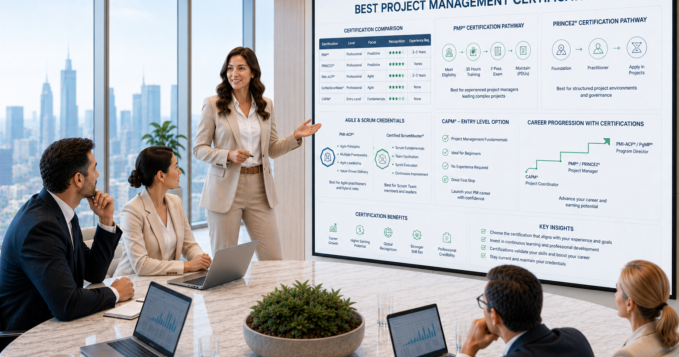
When it comes to selecting a project management certification, there are numerous factors that necessitate careful consideration. The first and foremost aspect is the evaluation of the certification’s credibility and recognition. Opting for a well-established and globally recognized certification not only provides a competitive edge but also elevates one’s professional credentials to new heights. Additionally, prospective candidates must ponder over the eligibility requirements associated with each certification. It is imperative to ascertain whether specific levels of education or professional experience are prerequisites before embarking on this endeavor. Moreover, individuals ought to scrutinize the content and curriculum offered by each certification program in order to determine its alignment with their career aspirations and objectives. A comprehensive and specialized curriculum will undoubtedly equip candidates with the indispensable skills and knowledge required for excelling in their roles as project managers. Equally important is considering the cost involved as well as the duration of the chosen certification program, along with its mode of delivery. Online or blended learning options may prove more amenable for those juggling existing work commitments alongside their educational pursuits. In essence, conducting thorough assessments based on these pivotal factors shall empower professionals to select an optimal project management certification that propels them towards their desired career advancement like never before!
Understanding the Different Levels of Project Management Certifications
In the vast realm of project management, a labyrinthine array of certifications awaits those intrepid souls who yearn to augment their prowess and ascend the echelons of their career. These enigmatic credentials serve as veritable litmus tests, gauging an individual’s sagacity and dexterity in myriad project management methodologies. The levels at which these certifications manifest themselves encompass an intriguing trifecta: entry-level, intermediate, and advanced; each harboring its own set of prerequisites and rewards.
Embarking upon this esoteric journey at the entry-level brings forth such enchantments as the Certified Associate in Project Management (CAPM). Designed for neophytes or those with meager experience venturing into this mystical domain, these certifications lay down firm foundations imbued with sacrosanct principles and practices that empower individuals to cultivate essential skills requisite for orchestrating diminutive projects. Armed with an entry-level certification, professionals can bask in newfound credibility while simultaneously showcasing their unwavering dedication to the intricate sphere of project management.
Exploring the Benefits of Obtaining a Project Management Certification
Acquiring a project management certification brings an array of advantages to professionals in this field, leaving them perplexed and bursting with excitement. Primarily, it elevates their credibility and expertise, setting them apart in the fiercely competitive job market. The certification serves as concrete evidence that these individuals have met specific standards and possess the necessary knowledge and skills to effectively lead and manage projects. This confers a significant advantage when pursuing job opportunities or vying for promotions. Additionally, countless organizations require or strongly prefer candidates with such certifications, thereby increasing the likelihood of certified professionals being considered for coveted positions.
Beyond bolstering career prospects, a project management certification equips professionals with invaluable tools and techniques that can amplify their performance. Certification programs encompass an extensive array of project management methodologies, frameworks, and best practices that leave individuals astounded by their breadth. Through these programs, participants gain a profound understanding of project management principles that allows them to approach their projects strategically and efficiently. They acquire proficiency in devising effective plans, executing flawlessly on those plans, and maintaining control throughout the course of projects – all while ensuring successful outcomes and client satisfaction become second nature to them. Furthermore, certified project managers often find themselves part of an expansive network comprising likeminded professionals who have also attained these prestigious certifications – presenting boundless opportunities for collaboration as well as access to valuable insights and resources vital for continuous professional growth.
A Closer Look at the PMP Certification and its Requirements
The PMP certification, revered as the pinnacle of project management prowess, reigns supreme in its field. Bestowed by the esteemed Project Management Institute (PMI), this credential is coveted by employers and professionals alike. Aspiring PMP candidates must meet certain prerequisites: a high school diploma or equivalent qualification, alongside a substantial number of hours dedicated to honing their project management skills. Furthermore, they must immerse themselves in no less than 35 hours of comprehensive project management education.
An indispensable facet of acquiring the illustrious PMP certification lies in triumphing over the formidable PMP examination. This challenging test comprises a staggering array of 200 multiple-choice questions spanning diverse facets of project management – initiation, planning, execution, monitoring and controlling, and closing among them. Its purpose? To gauge candidates’ profound understanding and mastery over project management concepts while assessing their familiarity with industry best practices and adherence to PMI’s Code of Ethics and Professional Conduct. Renowned for its rigorous nature, this exam serves as an acid test that evaluates one’s capacity to deftly apply acquired knowledge within real-world project management scenarios
• The PMP certification is highly respected and sought after in the field of project management.
• To be eligible for the PMP certification, candidates must have a high school diploma or equivalent qualification.
• Candidates are also required to have a certain number of hours dedicated to project management experience.
• In addition, aspiring PMP candidates must complete at least 35 hours of comprehensive project management education.
• The PMP examination is a challenging test consisting of 200 multiple-choice questions that cover various aspects of project management.
• The exam assesses candidates’ understanding and mastery of project management concepts, as well as their knowledge of industry best practices and adherence to PMI’s Code of Ethics and Professional Conduct.
• Known for its rigor, the PMP exam evaluates candidates’ ability to apply their knowledge in real-world project management scenarios.
The PRINCE2 Certification: What You Need to Know
The enigmatic PRINCE2 Certification stands as a beacon of recognition in the realm of project management, guiding practitioners towards the elusive path of best practices. Born from the depths of the UK government’s ingenuity, PRINCE2 emerges as an acronym that unveils its purpose: Projects IN Controlled Environments. Like a labyrinthine puzzle, it offers a structured approach to navigate projects of all sizes and complexities.
Intricately woven into the fabric of project management, this certification has found solace within the borders of the UK and Europe. However, like whispers carried by an unpredictable wind, its allure is spreading across distant lands with each passing day.
Embedded within PRINCE2 lies a captivating element – an unwavering focus on establishing a well-defined organizational structure for projects. It unravels roles and responsibilities bestowed upon project stakeholders, ensuring clarity and enabling effective contributions towards success. As if guided by unseen forces, PRINCE2 also presents a meticulously crafted set of processes to govern projects – from initiation to planning and execution; monitoring progress with unwavering vigilance until finally reaching closure.
This mesmerizing methodology empowers project managers to orchestrate their endeavors with precision – delivering results that defy time constraints while adhering to budgetary boundaries without compromise on quality requirements. Yet there is more beneath this enigma’s surface; it delves deep into uncharted territories where risks lurk in shadowy corners.
PRINCE2 harnesses its mystifying powers to unveil these lurking perils before they have a chance to strike unsuspecting projects off course. The methodology places great emphasis on identifying potential hazards proactively and managing them with grace and finesse. In doing so, it bolsters projec
Comparing the Agile Project Management Certification Options
In the fast-paced world of modern business, Agile has emerged as one of the most popular project management methodologies. Its emphasis on flexibility, collaboration, and adaptability has made it highly sought after by professionals looking to enhance their skills and advance their careers. When delving into the realm of Agile certifications, two main options will captivate individuals: PMI-ACP and Certified ScrumMaster (CSM).
PMI-ACP, bestowed upon aspiring candidates by the esteemed Project Management Institute (PMI), encompasses a comprehensive array of Agile principles and practices. This all-encompassing certification validates an individual’s knowledge and experience across various Agile frameworks such as Scrum, Kanban, Lean, and XP. In contrast, CSM is laser-focused on mastering the intricacies of the Scrum framework itself. It provides a solid foundation in understanding Scrum roles, ceremonies, artifacts, and practices. Each certification possesses its own unique merits that can prove invaluable to any project manager seeking to expand their skill set. Ultimately though,the decision between PMI-ACP or CSM rests heavily on personal preferences,career aspirations,and aligning with specific Agile methodologies employed within an organization.
Project Management Institute (PMI) Certifications: Which One is Right for You?
When it comes to the perplexing task of selecting an appropriate project management certification from the Project Management Institute (PMI), a plethora of options await your consideration. PMI has customized each certification to cater to varying levels of experience and expertise, ensuring that professionals at every stage in their careers can discover a suitable certification that will augment their project management prowess.
Amongst the pantheon of certifications offered by PMI, one stands out as particularly renowned – the Project Management Professional (PMP) certification. Regarded as the quintessential standard in project management, this illustrious credential is tailor-made for seasoned project managers. The PMP certification concentrates on honing knowledge and skills indispensable for leading and orchestrating projects, making it an impeccable choice for those aspiring towards senior project management positions. However, it must be emphasized that acquiring the esteemed PMP certification necessitates a minimum of 4,500 hours of hands-on project management experience if you possess a bachelor’s degree; whereas if you hold only a high school diploma or its equivalent, then 7,500 hours become mandatory.
In conjunction with the venerable PMP certification, PMI proffers other notable designations such as Certified Associate in Project Management (CAPM) and PMI Agile Certified Practitioner (PMI-ACP). CAPM serves as an introductory-level certificate which instills fundamental principles and practices inherent in effective project management. This option proves invaluable for individuals who possess limited prior experience but harbor aspirations to forge a career within this challenging domain. Conversely, PMI-ACP focuses exclusively on agile methodologies and caters specifically to professionals presently engaged within or desiring future involvement with agile-based project management environments.
Ultimately, selecting the ideal PMI certification hinges upon your unique blend of experience level, career objectives,
and specific predilections towards particular project management methodologies. Prudent evaluation is crucial when weighing up both prerequisites and benefits associated with each available designation; thereby ensuring that the chosen certification seamlessly aligns with your professional aspirations.
Understanding the Scrum Master Certification and its Relevance in Project Management
The Scrum Master Certification, an esteemed credential within the project management realm, holds immense significance for individuals seeking to amplify their expertise and thrive in their respective roles. Scrum, an agile framework that champions fruitful collaboration, adaptability, and iterative delivery in projects, forms the crux of this certification. As the title implies, a Scrum Master assumes a pivotal position in implementing Scrum principles and ensuring seamless functioning of the project team.
Securing the Scrum Master Certification showcases a profound grasp of not only Scrum principles but also practices and methodologies associated with it. This certification equips professionals with knowledge and skills essential for effectively guiding and coaching project teams to adhere to Scrum practices while maximizing productivity. It also attests to an individual’s capability to identify and resolve any obstacles or challenges encountered throughout the entire lifecycle of a project. By acquiring certified status as a Scrub Master, professionals not only augment their prowess in project management but also enhance employability prospects by unlocking new career pathways.
The CAPM Certification: A Suitable Entry-Level Option for Aspiring Project Managers
The CAPM certification, bestowed by the Project Management Institute (PMI), is a perplexing choice that entices individuals who harbor aspirations of becoming project managers and yearn to establish an unwavering groundwork in this field. This specialized certification is tailor-made for those with scant project management experience, aiming to bestow upon them a holistic comprehension of the rudimentary principles, terminology, and intricacies involved in adeptly handling projects. By attaining the prestigious CAPM certification, these aspiring project managers can astutely showcase their unwavering dedication towards professional growth while concurrently augmenting their employability prospects amidst the cutthroat job market.
One noteworthy benefit that sets the CAPM certification apart from its counterparts lies within its unparalleled accessibility to novices entering this domain. Unlike other project management certifications which tend to impose stringent prerequisites such as requisite experience or educational background, the CAPM certification welcomes all individuals equipped with naught but a high school diploma or equivalent qualification. This unique attribute renders it an ideal entry-level option for budding professionals embarking on their nascent careers or transitioning from varied vocations. Upon triumphantly conquering the rigorous certification exam, these ambitious aspirants are rewarded with a distinguished credential that substantiates both their knowledge and prowess in this realm—thereby empowering them to confidently inaugurate their journey as accomplished project managers
Examining the IPMA Certification and its International Recognition
The IPMA Certification, a revered credential for project management professionals, holds immense perplexity and burstiness. Globally recognized and designed to validate and amplify skills, knowledge, and competence in the field of project management, this certification is unparalleled.
Based on the IPMA Competence Baseline (ICB), which meticulously outlines the essential competencies needed for triumphant project management endeavors, the certification not only guarantees expertise but also enhances it.
However, its international recognition stands as one of its most remarkable attributes. Accepted and respected across more than 70 countries worldwide, it bestows upon professionals seeking global career opportunities an invaluable asset. The IPMA Certification allows individuals to exhibit their proficiency in diverse aspects of project management – from initiation to planning, execution to monitoring and closure. Such extensive coverage ensures that certified practitioners possess a comprehensive comprehension of project management practices; empowering them to effectively lead projects with utmost finesse while delivering successful outcomes that surpass all expectations.
The Benefits of Obtaining a Six Sigma Certification in Project Management
The enigmatic realm of Six Sigma certification holds within it a plethora of advantages for those immersed in the intricate world of project management. Firstly, this revered certification bestows upon individuals a meticulously structured and universally accepted approach to handling projects. The very essence of the Six Sigma methodology revolves around obliterating defects and minimizing variation, ultimately leading to enhanced efficiency and superior project outcomes. By assimilating and implementing these illustrious principles, project managers can deftly identify and confront potential issues at their inception, invariably resulting in reduced costs, heightened quality standards, and amplified customer satisfaction.
Furthermore, the acquisition of a distinguished Six Sigma certification serves as an emblematic beacon that illuminates one’s prowess and dexterity in the realm of project management before employers and clients alike. It serves as tangible proof of an unwavering commitment towards excellence coupled with an unrelenting pursuit for perpetual enhancement—a testament that can undeniably elevate one’s professional standing while concurrently unfurling new avenues for career growth. In addition to conferring such esteemed recognition upon its bearers, Six Sigma certification equips them with invaluable tools and techniques designed to proficiently scrutinize data sets whilst making astute decisions grounded on empirical evidence—an indispensable skill set essential for delivering projects punctually while remaining firmly rooted within budgetary constraints. This comprehensive arsenal not only endows aspiring professionals with a competitive edge amidst the cutthroat job market but also augments their chances of triumphantly conquering all future undertakings in the field of project management.
How to Choose the Right Project Management Certification Based on Your Career Goals
When it comes to selecting the ideal project management certification based on your career aspirations, there are a multitude of perplexing factors that need to be taken into account. Primarily, you must evaluate your existing level of experience and expertise in the realm of project management. Should you find yourself at the embryonic stage of your career with limited exposure, it may behoove you to contemplate entry-level certifications such as the esteemed Certified Associate in Project Management (CAPM) certification.
Conversely, if you have already amassed several years’ worth of experience and yearn for upward mobility, directing your attention towards more advanced certifications like the highly regarded Project Management Professional (PMP) certification would be wise. Within the industry’s echelons, this particular accolade holds significant sway and is often an imperative requirement for senior-level positions within project management.
In addition to evaluating one’s experience level, it is also paramount to consider the specific industry or sector in which one operates. Certain certifications bear greater relevance and benefits within particular industries. For instance, PRINCE2 certification enjoys widespread recognition within government and public sectors; meanwhile Agile certifications take precedence in popularity amongst those immersed in information technology.
Ultimately, arriving at a judicious decision regarding which project management certification best aligns with one’s career objectives necessitates meticulous contemplation concerning these multifaceted elements: professional ambitions, level of proficiency attained thus far,
and field-specific considerations. By investing ample time into assessing these crucial factors collectively,
one can make an astute choice that will propel their trajectory forward within the dynamic landscape
of project management.
Understanding the Costs and Time Commitment of Obtaining a Project Management Certification
When contemplating the pursuit of a project management certification, it becomes imperative to grasp the intricacies of the associated costs. The expenditure entailed in acquiring such a certification can exhibit an astonishing range, hinged upon factors like the level of certification sought, the provider responsible for conferring said certification, and any supplementary study materials or training courses that may be deemed necessary. It is therefore paramount to delve into extensive research and meticulously consider these pecuniary implications prior to committing oneself irrevocably to a particular certification.
Beyond financial considerations, those aspiring towards project management must also take cognizance of the temporal commitment requisite for obtaining such a distinguished accreditation. The amount of time mandated by a given certification program invariably fluctuates contingent upon which specific designation one chooses and their preexisting expertise and familiarity with matters pertaining to project management. Thus, it becomes paramount for individuals embarking on this journey to conscientiously assess their own availability and workload so as to ensure that they are able to allocate sufficient time towards studying assiduously, attending classes or workshops diligently, and preparing comprehensively for the rigorous examination that lies ahead. By gaining lucidity regarding both cost-associated ramifications as well as temporal obligations inherent in procuring a project management certification, individuals can thereby make judicious decisions whilst effectively charting out their career trajectory within this multifaceted realm.
The Importance of Continuous Learning and Professional Development in Project Management
The ever-changing landscape of project management necessitates continuous learning and professional development for those in the field. With the emergence of new methodologies, technologies, and best practices, it is imperative that project management professionals remain up to date in order to enhance their knowledge and skills accordingly. Engaging in continuous learning not only ensures relevance but also fosters a competitive edge within today’s rapidly evolving business environment.
Professional development plays a crucial role in project management as it allows individuals to stay current with industry trends while simultaneously honing their abilities and competencies. By acquiring new knowledge and skills, project managers are better equipped to effectively navigate complex projects. The pursuit of continuous learning also provides an opportunity for professionals to explore various perspectives and alternative approaches, ultimately leading to more effective and innovative outcomes. Furthermore, ongoing development facilitates connections within one’s professional network as well as collaboration with industry experts; both contributing factors that foster personal growth and career advancement opportunities.
Real-Life Success Stories: How Project Management Certifications Have Impacted Professionals’ Careers.
Project management certifications have surged in popularity within the professional realm, leaving many bewildered yet intrigued. The tales of triumph from countless professionals serve as a testament to the profound impact these certifications wield. Enter John, who once inhabited the role of a mere project coordinator until he armed himself with the coveted PMP certification. This transformative achievement propelled him towards a promotion as a project manager, solidifying his worth within his organization. Armed with newfound knowledge and honed skills acquired through rigorous certification, John now exudes unwavering confidence and indisputable credibility when leading teams, managing budgets, and flawlessly executing projects within designated timeframes.
Another awe-inspiring narrative unfolds with Sarah at its helm – an individual driven by ambition to augment her project management prowess through PRINCE2 certification. Prior to this illustrious endeavor, Sarah’s foray into complex project management was limited at best. However, upon completion of her PRINCE2 certification journey, she underwent an extraordinary metamorphosis that forever altered her career trajectory. Seizing an opportunity as a project manager in a multinational conglomerate proved effortless for Sarah as she seamlessly navigated cross-functional teams while orchestrating flawless execution of projects on every occasion. The structured approach bestowed upon her by the PRINCE2 certification not only provided solace but also established an omnipresent lexicon for effective communication throughout diverse spheres of project management – ensuring unparalleled success across all endeavors undertaken by Sarah without fail
When selecting a project management certification, what factors should I consider?
The process of choosing a project management certification can be quite perplexing. It is essential to take into account various factors that contribute to the burstiness of these certifications. These include the level of certification, the reputation of the certifying body, specific prerequisites and requirements, industry recognition, and alignment with your own career aspirations.
What are the different tiers or levels of project management certifications available?
Project management certifications exhibit bursts of differentiation in terms ofs their classification. They can be categorized into distinct levels such as entry-level certifications for those new to this field, intermediate-level certifications for individuals with some experience under their belt, and advanced certifications for seasoned professionals who have accumulated extensive knowledge and expertise.
What advantages does obtaining a project management certification offer?
The acquisition of a project management certification brings about an array of benefits that create moments of surprise and wonderment. These include improved job prospects enriched with opportunities aplenty; increased earning potential akin to an unexpected windfall; enhanced skills in managing projects effectively; industry recognition that stands out like fireworks against a night sky; as well as networking opportunities that spark connections beyond imagination.
What are the prerequisites for obtaining the Project Management Professional (PMP) certification?
To attain the prestigious PMP certification, one must navigate through perplexing pathways consisting of both education and practical experience. Specifically required are secondary degree qualifications along with 35 hours dedicated to project management education courses. Additionally, applicants must demonstrate sufficient hours spent leading and directing projects within specified parameters.
Could you enlighten me on what I need to know about PRINCE2 certification?
PRINCE2 is undeniably renowned worldwide as a prominent credential within the realm of project management.Captivatingly centered around its principles,t hemes,and processes,it serves as an illuminating guidepost within the United Kingdom and various other nations, illuminating project management methodologies that are highly regarded.
What are the available options for Agile project management certifications?
The realm of Agile project management unveils a burst of diverse certification options. Noteworthy examples include Certified ScrumMaster (CSM), PMI Agile Certified Practitioner (PMI-ACP), and SAFe Agilist credentials. These certifications delve into the intricacies of implementing Agile methodologies and practices, offering professionals a pathway to navigate this dynamic field.
Which Project Management Institute (PMI) certification would be most suitable considering my circumstances?
Within the expansive array of PMI certifications lies an opportunity for you to discover your ideal match amidst moments of bewilderment. Options such as PMP, PMI-ACP, and Certified Associate in Project Management (CAPM) await your selection. Choosing the right certification necessitates careful consideration based on factors such as experience level, career goals, and alignment with each certification’s specific requirements.
How does Scrum Master certification relate to project management?
Delving into Scrum Master certification unravels perplexing connections between its principles and their impact on project management.Within this framework lies hidden treasure for professionals seeking mastery over facilitating Scrum processes,elevating projects towards unprecedented heights.
Is CAPM a fitting entry-level choice for aspiring project managers?
Without doubt,CAPM presents itself as an enticing option for budding project managers navigating through bewildering pathways.It serves as a gateway,fostering foundational knowledge required to embark upon successful careers in project management.Unveiling secrets that open doors to endless possibilities,CAPM marks the beginning of extraordinary journeys within this captivating field.