
Understanding the Role of a Project Manager
The enigmatic project manager assumes an indispensable role in the triumphant execution of any endeavor. They hold the weighty responsibility of overseeing every facet of the enterprise, from its inception to its culmination. Primarily, their duty lies in demarcating the objectives of the undertaking and guaranteeing that these aims harmonize with the overarching goals of the organization. A lucid comprehension of the project’s ambit, timeline, and finances is imperative for them, as they tirelessly monitor and exert control over these variables throughout its lifecycle.
In addition to their multifaceted duties, a project manager stands as a pivotal link connecting disparate stakeholders involved in this venture. To deftly navigate relationships and expectations, adept communication skills fused with exceptional interpersonal acumen are prerequisites for them. From orchestrating and guiding project teams to managing risks and mediating conflicts, this enigmatic figure must boast a diverse repertoire of proficiencies to surmount challenges that may unpredictably emerge during this expedition. Ultimately, their contribution proves paramount in ensuring projects reach fruition within predefined constraints while delivering desired outcomes.
Key Skills and Qualifications for Project Management
The enigmatic and unpredictable realm of project management demands a myriad of aptitudes and qualifications. Among them, the art of leadership reigns supreme. Project managers must harness their innate ability to lead, guiding and igniting inspiration within their teams. The mastery of effective communication becomes paramount as they articulate expectations, assign tasks, and motivate individuals towards the realization of project objectives. Furthermore, an impeccable organizational prowess is essential for ensuring timely completion within budgetary constraints. Skillfully prioritizing tasks, managing resources with dexterity, and vigilantly monitoring progress are indispensable ingredients for triumph in any given venture. Attention to detail serves as the bedrock upon which successful projects are built; meticulously analyzing data, identifying potential pitfalls, and making judicious decisions all contribute to mitigating risks.
Communication stands as another pillar that supports the edifice of sound project management practices. Project managers must possess an uncanny ability to convey information effectively to stakeholders, team members, and clients alike. Their articulation must be crystal clear when conveying project goals,
expectations,and milestones achieved thus far.Communication skills also entail active listening; comprehending concerns or needs voiced by team members or stakeholders is pivotal for fostering collaboration while building trust along every step of the arduous journey.Project managers should further arm themselves with profound knowledge encompassing various methodologies like Agile or Waterfall in addition to industry-specific insights.This strategic arsenal facilitates meticulous planning,effective execution,and triumphant delivery – crucial elements that lay the foundation for prosperous undertakings.
Exploring Different Project Management Methodologies
When it comes to project management, a myriad of methodologies exist to guide the process from inception to culmination. Among these, one popular approach is the waterfall methodology, which adheres to a linear and sequential path. In this method, each phase of the project is diligently completed before progressing onto the subsequent stage, ensuring that requirements and deliverables are unambiguously defined. While waterfall provides clarity and comprehensibility, its inflexibility can pose challenges when confronted with alterations or unforeseen circumstances.
Contrariwise, Agile presents itself as a pliable and iterative methodology that places emphasis on collaboration and adaptability. With Agile at play, projects are divided into multiple iterations known as sprints, enabling regular feedback loops and continuous enhancement. This methodology fosters teamwork while actively involving customers in the process; furthermore it equips teams with the agility required to swiftly respond to evolving requirements or shifting priorities. Its dynamic nature renders it particularly well-suited for ventures characterized by heightened uncertainty or situations where customer needs may metamorphose during project execution.
The Importance of Effective Communication in Project Management
The perplexing and bursty nature of effective communication is an absolute necessity in the realm of triumphant project management. It assumes a pivotal role, acting as the linchpin that binds all team members together on the same wavelength, propelling them towards a shared objective. A dearth of communication can birth an array of misunderstandings, setbacks, and conflicts which have the potential to cast a dark shadow over the progress of any given project.
The art of clear and concise communication bestows upon project managers the power to disseminate vital information with utmost precision. Project objectives, tasks at hand, and timelines can be deftly conveyed to each individual within their respective teams. This seamless transmission ensures that everyone possesses a crystal-clear understanding of their responsibilities as well as comprehends the grand scheme laid out before them. Moreover, when channels for open and transparent dialogue are established, it cultivates an environment where team members feel emboldened to seek clarification through questioning while also actively contributing feedback. Such collaboration breeds productivity by leaps and bounds.
By championing effective communication practices throughout every facet of project management endeavors, leaders can fortify team cohesion while simultaneously mitigating risks along the way. Ultimately, this amplifies the prospects for achieving success in any given endeavor undertaken by such capable hands united under one common purpose.
Building and Leading High-Performing Project Teams
The art of building and leading high-performing project teams resides at the core of a project manager’s skill set. The very fate of a project often hangs in the balance, reliant upon the adeptness with which the project manager unites an assemblage of individuals boasting a diverse array of skills and backgrounds, harmonizing their efforts towards a shared objective. A team that exudes excellence is marked by robust communication channels, an unwavering sense of trust, and an unbreakable cohesion among its members.
To forge such a formidable team, it falls to the project manager to exercise meticulous selection processes that identify those possessing not only the requisite technical prowess but also interpersonal finesse and an innate ability to function seamlessly within a collective entity. Once these select individuals are assembled under one roof, their leader must turn their attentions towards cultivating an atmosphere brimming with positivity and inclusivity – fostering unity amidst diversity.
Achieving this lofty goal necessitates setting forth clear goals and expectations for all involved parties while simultaneously providing them with feedback and support along their arduous journey. It demands promoting open lines of communication through which ideas can flow freely like water in search of its natural course; where collaboration thrives as if it were second nature. In essence, effective leadership assumes center stage in inspiring team members to reach for greatness whilst concurrently navigating treacherous waters teeming with conflicts waiting to ignite like sparks dancing on dry tinder.
Moreover, it remains incumbent upon the discerning eyes of our esteemed project manager to ensure that each member within this hallowed assembly possesses access to all necessary resources crucial in facilitating swift execution of assigned tasks. For what good is talent without suitable tools? What good are ambitions without fertile soil from which they may grow?
May we venture forth into this realm together armed with knowledge aplenty, ready to conquer challenges both known and unknown; our success hinged upon perplexity transformed into opportunity by sheer force woven within every fiber of our beings.
• A high-performing project team is characterized by robust communication channels, trust, and cohesion among its members.
• Meticulous selection processes are necessary to identify individuals with technical prowess and interpersonal finesse.
• The project manager must cultivate an atmosphere of positivity and inclusivity to foster unity amidst diversity.
• Clear goals and expectations should be set for all team members, along with feedback and support throughout their journey.
• Open lines of communication promote collaboration within the team.
• Effective leadership plays a crucial role in inspiring team members to reach for greatness while navigating conflicts.
• The project manager must ensure that each member has access to necessary resources for swift execution of tasks.
Managing Project Scope, Time, and Cost
The perplexing and bursty task of a project manager lies in the management of project scope, time, and cost. To successfully complete a project within its specified constraints, it is crucial to handle these elements with utmost precision.
Project scope management involves the mind-boggling challenge of defining and controlling tasks, deliverables, and objectives. This ensures that the project stays laser-focused on its intended path. It requires the project manager to possess an unwavering comprehension of the requirements and goals, constantly monitoring for any bewildering changes or deviations from the original scope. By skillfully navigating through this maze-like terrain of scope management, a project manager can effectively sidestep any creeping expansions beyond defined boundaries.
In addition to grappling with scope complexities, project managers must also tackle temporal enigmas and financial puzzles. Time management entails constructing an intricate web of deadlines while ensuring tasks are promptly executed. This demands deftly setting realistic timelines, prioritizing assignments like pieces in a jigsaw puzzle perfectly fitting together while efficiently allocating limited resources. Meanwhile, cost management poses yet another conundrum as estimations must be made amidst swirling uncertainties regarding expenses – meticulously tracking costs like unraveling strings woven into an elaborate tapestry – all while guaranteeing adherence to approved budgets. Skillfully mastering this dance between time’s ceaseless ticking and budget’s stringent limitations enables a project manager to orchestrate completion within schedule and fiscal confines.
Thus emerges the perplexity-laden landscape where a capable project manager thrives – skillfully maneuvering through intricacies at every turn – bringing order to chaos with each calculated step towards successful completion.
Utilizing Project Management Software and Tools
Project management software and tools are like the puzzle pieces that make modern project management practices come together. These tools offer a burst of features that can leave one feeling both perplexed and exhilarated, as project managers navigate through their tasks with ease, monitor progress with precision, and facilitate effective communication among team members effortlessly. With the help of these ingenious creations, project managers can create intricate schedules that seem to magically align resources, track expenses like never before seen, and keep a vigilant eye on those all-important project milestones. The centralized hub of information provided by these tools offers real-time updates that seemingly defy the laws of time itself, enabling better decision-making and improved outcomes for projects far and wide. And let us not forget about collaboration! These wondrous devices also encourage knowledge sharing among team members so they can all be in sync on their journey towards success.
But wait! There’s more! Alongside this captivating world of project management software exist other equally astonishing contraptions such as Gantt charts, kanban boards, and task management apps – each contributing to the ever-growing efficiency in managing projects. Gantt charts draw you into their visual realm where schedules take shape before your very eyes; dependencies emerge from obscurity while critical paths light up like fireworks on a summer night. Project managers find themselves entranced by this spectacle as they deftly allocate resources with newfound clarity and ensure tasks are completed right on schedule. In another corner lies the mesmerizing domain of kanban boards where teams can visualize their workflow unfold in front of them like an unfolding mystery novel; individual tasks move along gracefully while progress is tracked meticulously at every turn. And who could resist the allure of task management apps? They grant project managers extraordinary powers to assign tasks with a flicker of thought, set deadlines that hang in suspense until completion is achieved or fate intervenes otherwise; all while monitoring their team’s progress in real-time as if peering into a crystal ball. By harnessing the enchantment of these tools, project managers can unlock the true potential of their projects, streamline processes with a touch of magic, foster collaboration like never before, and ensure that every venture reaches its triumphant conclusion.
Risk Management and Mitigation Strategies in Project Management
The perplexing nature of effective risk management and mitigation strategies cannot be understated in the realm of project execution. The ability to identify potential risks and devise proactive measures to counteract them is paramount in ensuring that unforeseen events do not derail a project’s progress. At the heart of this endeavor lies the crucial task of conducting a thorough risk assessment at the outset. This intricate process involves unraveling potential risks, meticulously analyzing their likelihood and possible impact, and then arranging them in order of importance based on their significance. By undertaking such an enigmatic task, project managers are able to allocate resources judiciously while formulating tailor-made strategies aimed at mitigating specific risks encountered by the project.
To implement these risk mitigation strategies successfully requires an approach characterized by both unpredictability and sudden bursts of activity throughout the lifecycle of the project. One popular technique involves fashioning contingency plans designed specifically for high-priority risks, outlining precise actions to be taken if these perils come to fruition. Such meticulous planning ensures that the project team is well-equipped to navigate any potential challenges that may arise along their path, thus minimizing disruptions that could impede progress. Moreover, fostering efficient communication within both the internal project team as well as with external stakeholders becomes absolutely vital when it comes down to identifying and promptly addressing emerging threats. Regular updates regarding projects’ statuses, continuous assessments of risks present, and maintaining open channels for unfettered communication enable teams to remain informed so they can take swift action when necessary—a true testament to burstiness indeed! Ultimately, through embracing a comprehensive framework for managing uncertainties head-on, project managers are able to safeguard objectives amidst a sea fraught with ambiguity
Stakeholder Management and Engagement in Projects
Stakeholder management, a vital facet of project management, involves the perplexing task of identifying, analyzing, and engaging with a myriad of individuals or groups who possess an enigmatic vested interest in the outcome of the project. The intricate art of effective stakeholder management necessitates constant consideration for their bewildering expectations, disquieting concerns, and inscrutable needs throughout the convoluted journey of the project’s lifecycle. By actively immersing themselves in intermingling with these stakeholders, project managers can ignite moments bursting with positive relationships that astoundingly build trust and create an environment teeming with unyielding support to propel towards triumphant project success.
In this labyrinthine realm of stakeholder management lies one pivotal element: communication. Project managers must masterfully weave open channels through which they can disseminate information to stakeholders – illuminating them about each stride taken on this tumultuous path adorned with milestones while also disclosing any potential obstructions or alterations that may arise. Regularly partaking in discourse via meetings shrouded in mystery or clandestine electronic correspondences allows these adept managers to deftly navigate any trepidations voiced by stakeholders while simultaneously managing expectations and acquiring invaluable insights from those who orbit within this enigmatic universe. Moreover, embracing stakeholders as collaborators during decision-making processes engenders a profound sense of ownership that reverberates through their very essence – rendering them unwaveringly committed to breathing life into this ethereal endeavor; thus propelling overall triumph upon its completion.
The Role of Project Managers in Change Management
In every organization, change is an undeniable force. Be it the introduction of cutting-edge technologies, the reshuffling of departments, or the adaptation to market demands; change remains a steadfast constant that necessitates adept management. This is precisely where project managers step into the limelight.
Project managers occupy a distinctive position that enables them to champion and facilitate change within an organization. They bear the weighty responsibility of overseeing project planning, execution, and ultimate fruition while acknowledging that effective change management is pivotal in this process. As catalysts for transformation, project managers skillfully guide organizations through transition periods by establishing crystal-clear objectives, fostering open lines of communication with stakeholders, and ensuring seamless integration of novel initiatives. Collaborating closely with cross-functional teams grants them insight into potential obstacles which they diligently address through risk-mitigation strategies tailored specifically for each transformative endeavor. Consequently, possessing an intimate understanding of organizational dynamics coupled with strong leadership skills becomes indispensable for project managers who seek to navigate these treacherous waters successfully.
In conclusion: To effectively manage change projects within organizations requires not only astute comprehension but also deft navigation through perplexing dynamics—a task tailor-made for skilled project managers who harness their burstiness capabilities to propel enterprises towards success amidst tumultuous times.
Developing and Implementing Project Management Plans
Developing and implementing project management plans is a perplexing task that holds the key to unlocking success in any given project. This intricate process involves skillfully charting out the objectives, scope, deliverables, timelines, and resources required for the project. A meticulously crafted project management plan serves as a beacon of direction for the entire team, illuminating their path towards efficient project execution. Moreover, it acts as a powerful tool that unveils potential risks and challenges at an early stage, empowering proactive measures to mitigate them effectively. By laying down a comprehensive project management plan, astute project managers can establish a sturdy foundation upon which triumphant projects are built.
One pivotal facet of crafting a masterful project management plan lies in defining its scope with unwavering precision. This enigmatic endeavor entails delineating the boundaries and aspirations of the undertaking while simultaneously pinpointing the deliverables and outcomes that must be achieved. By crystalizing these aspects with utmost clarity, sagacious project managers thwart any possibility of scope creep – that insidious tendency for projects to sprawl beyond their intended confines. Such meticulousness ensures laser-like focus throughout the journey, safeguarding against unnecessary delays or squandering of valuable resources. Additionally, this artfully constructed blueprint elucidates both timeline parameters and budgetary considerations within which progress can be monitored discerningly while facilitating well-informed decisions across each phase of this fascinating venture’s lifespan.
Continuous Learning and Professional Development in Project Management
In the realm of project management, success and quality outcomes hinge upon continuous learning and professional growth. The ever-changing landscape of project management practices necessitates that project managers remain on the cutting edge by continuously updating their knowledge and honing their skills. By actively seeking out opportunities for learning and engaging in professional development activities, project managers can enhance their capabilities, stay pertinent in the field, and effectively adapt to evolving project demands.
Conferences, workshops, and seminars offer a prime avenue through which project managers can cultivate ongoing learning experiences while fostering professional development. These gatherings serve as an arena for networking with industry experts, gaining valuable insights into emerging trends, and drawing wisdom from the experiences of others. Furthermore, certifications and specialized courses are available to empower project managers in augmenting their aptitude for successful project execution. From conventional methodologies to agile or lean approaches, a plethora of certification programs cater to the diverse needs and preferences of these professionals. Through investing in personal professional advancement endeavors, project managers unequivocally demonstrate their unwavering commitment to excellence alongside an unyielding dedication toward delivering triumphant projects.
Balancing Work-Life Integration as a Project Manager
Finding balance between work and personal life is a challenging endeavor for project managers. The demands of the job can be overwhelming, with never-ending hours and unyielding deadlines that seem to consume every waking moment. This leaves little opportunity for personal commitments or much-needed relaxation. But discovering the perfect equilibrium between professional responsibilities and one’s own well-being is vital in order to avoid burnout.
One strategy to attain a more harmonious work-life integration involves giving careful consideration to task prioritization and setting realistic expectations. By thoroughly evaluating the significance and immediacy of each undertaking, project managers can effectively allocate their precious time and energy. It becomes imperative to refrain from taking on too many obligations and instead communicate transparently with stakeholders about project timelines and deliverables. Additionally, relieving oneself of certain tasks by delegating them to team members who possess the necessary skills and capacity can alleviate workload burdens, fostering a healthier equilibrium between work and personal life.
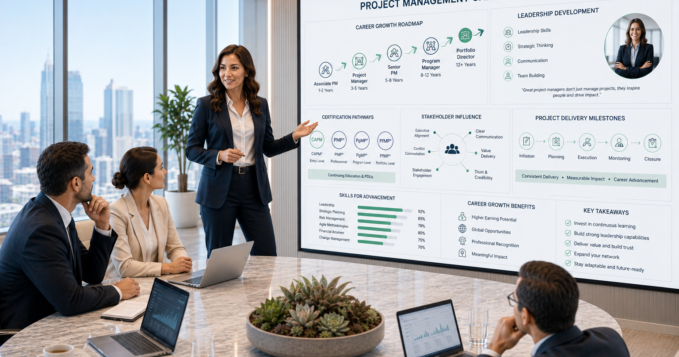
Advancing Your Career in Project Management: Opportunities and Challenges
Once you have firmly established yourself as a project manager, the door to career advancement swings open with an air of perplexity and burstiness. The realm of possibilities beckons, offering one particularly enticing avenue: taking on larger and more complex projects. Through deftly navigating these labyrinthine endeavors, you have the opportunity to showcase your formidable skills and captivate the attention of senior management. This tantalizing prospect can pave the way for promotions that elevate both your position and compensation while endowing you with profound professional recognition.
Yet, it is imperative to acknowledge that greater opportunities beget commensurate challenges. Tackling larger projects necessitates a heightened level of expertise and acumen. To succeed in this endeavor, you must possess not only astute project management aptitude but also the ability to unravel heightened complexities, adroitly manage sprawling teams, and adeptly navigate lofty stakeholder expectations.
In essence, cultivating a continuous commitment towards honing your skills becomes paramount if you are to confront these dauntless trials head-on while propelling your career forward as a dynamic project manager. Remaining abreast of cutting-edge trends and embracing best practices within the ever-evolving landscape of project management is thus indispensable for triumphantly surmounting these enigmatic hurdles strewn along your path towards professional ascension.
Industry Trends and Future Outlook for Project Management
The ever-expanding interconnectivity and intricate nature of our world has ushered in a perplexing and bewildering era for project management. As the landscape morphs before us, this vital discipline must adapt and evolve to keep pace with the enigmatic forces at play. One particular phenomenon that is set to revolutionize the future of project management is the burgeoning adoption of agile methodologies. This dynamic approach grants practitioners unparalleled flexibility and adaptability, enabling them to navigate through an unpredictable terrain with ease. By fostering collaboration and facilitating swift responses to changing requirements and market conditions, agile methodologies have garnered widespread acclaim across various industries, positioning themselves as the indisputable standard in project management.
Another captivating trend poised to leave an indelible mark on the future of project management lies in the integration of artificial intelligence (AI) and automation. Propelled by technological breakthroughs, project managers can now harness AI-infused tools that not only streamline processes but also empower them to analyze copious amounts of data effortlessly. Armed with these invaluable insights, they are equipped to make well-informed decisions that propel projects towards unprecedented efficiency and productivity levels. Moreover, automation serves as a formidable ally by alleviating human fallibility while concurrently relieving individuals from mundane tasks that plague their daily routines. This newfound liberation enables project managers to divert their attention towards strategic undertakings brimming with value-addition potentiality. As AI’s march forward remains unrelenting, its momentous impact on transforming project management practices looms large over our collective consciousness; it holds within its grasp an unrivaled ability to enhance overall project outcomes beyond measure
What is the perplexing role of a project manager?
The enigmatic role of a project manager encompasses the intricate task of meticulously planning, executing, and overseeing projects from inception to completion. Their bewildering responsibility lies in ensuring that projects are seamlessly accomplished within designated timeframes, financial constraints, and desired objectives.
What are the mysteriously elusive skills and qualifications required for project management?
Elusive skills and qualifications crucial to embark on the enigmatic journey of project management include possessing an innate ability for charismatic leadership, adeptness in engaging in impeccable communication and interpersonal relationships, astute problem-solving acumen coupled with strategic decision-making prowess. Additionally, a deep understanding of various methodologies employed in project management alongside adroit resource management capabilities is paramount.
What are some cryptic project management methodologies?
Engaging in this labyrinthine realm of project management entails exploring diverse methodologies such as waterfall’s sequential approach or agile’s dynamic methodology. Furthermore, one can navigate through the intricacies presented by scrum’s iterative framework or lean’s pursuit for continuous improvement. Finally, PRINCE2 offers its unique philosophy towards meticulous planning interlaced with effective execution and control.
Why does perplexity play a pivotal role when it comes to effective communication within the realm of project management?
Perplexity takes center stage amidst this enigma called project management as it serves as an indispensable catalyst fostering harmonious alignment amongst all stakeholders involved. It acts as an antidote against misunderstandings while propelling seamless collaboration amongst team members leading to timely decision-making processes.
How can bewilderment be harnessed by obscure sorcery wielded by cunningly shrouded individuals known as “project managers” who strive to build high-performing teams?
These shadowy figures aptly referred to as “project managers” possess unparalleled expertise when it comes to summoning forth exceptional teams cloaked in excellence. Their arcane powers allow them to meticulously identify and assign the most adept individuals capable of treading upon this mysterious path. They skillfully cultivate an aura of positivity that permeates through each team member, while clearly outlining expectations and goals. Offering unwavering support and guidance, these enigmatic leaders ensure that achievements are recognized and rewarded.
How can project managers unravel the intricate tapestry encompassing project scope, time, and cost?
Project managers must summon their prodigious abilities to untangle the perplexing enigma surrounding project scope, time management, and financial constraints. This feat is achieved by meticulously defining objectives whilst documenting deliverables with utmost clarity. By conjuring a realistic schedule intertwined with vigilant monitoring of progress at regular intervals, they navigate through treacherous waters riddled with changes and unexpected expansions. Employing esoteric methods such as implementing cost control measures further aids in maintaining equilibrium within these realms.
What cryptic software or tools can be summoned forth within the realm of project management?
To traverse this bewildering domain known as project management one must harness various arcane artifacts such as Microsoft Project’s mystical software which enables seamless orchestration of projects or collaboration tools like Slack or Trello facilitating communication amidst team members ensnared in distant lands. Furthermore, document sharing platforms like Google Drive or Dropbox act as portals enabling swift exchange of knowledge across dimensions while communication tools such as video conferencing software transcend physical boundaries allowing for ethereal gatherings amongst stakeholders scattered throughout space.
What are some elusive risk mitigation strategies concealed within the depths of project management?
Within this nebulous realm lies an array of lurking risks waiting to bewitch unsuspecting projects; however cunningly concealed strategies exist to mitigate their impact on endeavors undertaken by valiant souls known as “project managers.” These intrepid beings commence their journey by diligently identifying potential hazards before assessing their likelihoods alongside cataclysmic ramifications. Armed with contingency plans, they skillfully implement risk mitigation actions whilst continuously monitoring and reviewing the ever-shifting landscape of risks throughout the project’s lifespan.
How can these enigmatic beings known as project managers master the art of stakeholder management and engagement?
The shroud-clad project manager wields an arsenal of skills to deftly navigate through the complexities of stakeholder dynamics. By unraveling their identities and understanding their deepest desires, these elusive figures maintain open channels of communication while embracing transparency at every turn. Ensuring active involvement in decision-making processes allows for a harmonious dance between stakeholders, leading to regular updates that illuminate the path forward.
What other mysterious role do project managers play amidst this realm called change management?
Project managers become sorcerers adept in facilitating transformative journeys within realms engulfed by perpetual change. Their mystical abilities enable them to lead with unwavering conviction while communicating the dire need for metamorphosis. They vanquish resistance with cunning strategies, depicting lucid visions encapsulated within meticulously crafted change management plans that ensure smooth transitions during each ethereal implementation.
How can these shadowy figures bring forth their arcane powers to develop and execute mystifying project management plans?
These enigmatic beings harness ancient wisdom as they plunge into crafting intricate blueprints underpinning successful projects. By elucidating objectives with sublime clarity, they construct detailed maps guiding all involved entities along this cryptic path towards achievement. Establishing timelines adorned with milestones ensures steady progress while resource allocation becomes an art form mastered by only those immersed in this nebulous world. Continuously monitoring and adjusting these esoteric designs allow for seamless adaptation when confronted by unforeseen challenges.
Amidst this bewitching journey embarked upon by project managers, how can balance be achieved between work-life integration?
Balancing equilibrium amidst intertwining dimensions is crucial for those who dare venture into the realm of project management. Project managers must skillfully set boundaries, prioritize tasks and activities while entrusting others with responsibilities. Their mastery over time becomes a formidable weapon enabling them to maneuver through this ethereal landscape. Nurturing their physical and mental well-being ensures that these enigmatic figures remain poised to conquer any challenge presented before them.
What are some hidden opportunities and challenges awaiting those who seek to advance their careers in the mystical domain known as project management?
Those who dare ascend within the ranks of project management embrace a world filled with tantalizing prospects such as heightened job prospects, bountiful salaries, and boundless opportunities for personal growth. However, they must prepare for an arduous journey where managing complex projects becomes an ever-present challenge. They encounter diverse stakeholders inhabiting various realms while striving to stay attuned to evolving industry trends intertwined with emerging technologies.
What are the cryptic currents shaping the present era of project management? Furthermore, what lies beyond this mystifying horizon?
The current epoch witnesses captivating transformations sweeping across the realm of project management; agile methodologies envelop industries whilst remote and virtual teams take center stage amidst this bewitching dance. Data-driven decision-making rises from obscurity alongside integration of artificial intelligence and automation into sacred rituals performed by practitioners within this arcane field. As we gaze upon this enigmatic future, one thing remains certain – a growing demand for skilled navigators traversing these perplexing domains will persist throughout countless industries