
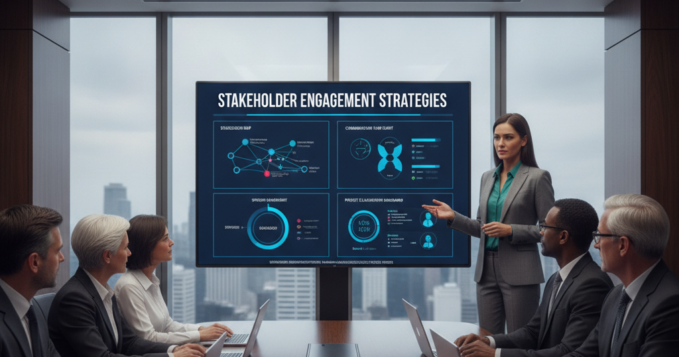
Stakeholder engagement strategies for managing successful projects are essential because project success depends on more than planning, reporting, and execution discipline. Projects are shaped by people who influence decisions, approve funding, provide requirements, use the final solution, manage risks, and respond to change. If those stakeholders are not informed, aligned, and engaged, even technically well-run projects can struggle. Delayed decisions, unclear expectations, resistance to change, conflicting priorities, and weak sponsorship often come from poor stakeholder engagement rather than poor scheduling alone.
Strong stakeholder engagement strategies for managing successful projects help teams build trust, improve communication, and maintain alignment throughout the delivery lifecycle. They make it easier to identify expectations early, manage influence carefully, and keep support visible when the project faces pressure. Good engagement is not simply about sending updates. It is about understanding stakeholder interests, responding to concerns, shaping decisions, and building the relationships that help projects move forward.
The best stakeholder engagement strategies for managing successful projects are practical, structured, and adaptable. They help project managers communicate with the right people in the right way at the right time. They also strengthen governance, reduce conflict, and improve benefit realization by making sure stakeholders remain connected to project goals. In complex delivery environments, stakeholder engagement is not a soft extra. It is a core project discipline.
If your organization is also improving communication discipline, our project communication tools and techniques guide can help support stronger stakeholder interaction across delivery teams.
Why Stakeholder Engagement Matters in Projects
Stakeholder engagement strategies for managing successful projects matter because stakeholders can accelerate or weaken delivery depending on how well they are involved. Sponsors influence decisions. Business users shape requirements. Operational teams affect implementation readiness. Senior leaders influence priorities. Vendors, regulators, and delivery partners may also shape outcomes. When engagement is weak, projects often become vulnerable to misunderstandings, delays, and resistance.
Without strong stakeholder engagement strategies for managing successful projects, organizations often face:
- delayed decisions
- unclear expectations
- resistance to change
- poor communication flow
- weak sponsorship support
- conflicting priorities
- lower stakeholder confidence
- reduced delivery momentum
By contrast, stronger stakeholder engagement improves trust and project stability. If your PMO is also strengthening alignment, our project alignment strategies guide can help connect stakeholder support with broader business priorities.
1. Identify Stakeholders Early
One of the most important stakeholder engagement strategies for managing successful projects is identifying stakeholders as early as possible. Teams should know who is affected, who has influence, and who needs to stay informed.
Stakeholders may include
- sponsors
- business owners
- end users
- delivery teams
- operational managers
- external suppliers
- governance bodies
Why this matters
Early identification prevents important voices from being missed.
2. Understand Stakeholder Interests
Not all stakeholders want the same thing. Strong stakeholder engagement strategies for managing successful projects include understanding each stakeholder’s priorities, concerns, and motivations.
This may involve
- expected outcomes
- concerns about change
- decision-making interests
- operational impacts
- preferred communication style
Why this matters
Understanding interests improves both messaging and relationship management.
3. Assess Influence and Impact
Some stakeholders are highly influential, while others are heavily affected by the project even if they do not hold formal authority. A good engagement approach considers both.
Assessment may include
- decision power
- political influence
- operational dependence
- level of project impact
- likelihood of support or resistance
Why this matters
Influence and impact analysis helps prioritize engagement effort.
4. Build a Stakeholder Engagement Plan
One of the smartest stakeholder engagement strategies for managing successful projects is creating a clear engagement plan rather than relying on ad hoc updates.
A plan may include
- stakeholder groups
- engagement objectives
- communication methods
- meeting frequency
- escalation routes
- ownership for relationship management
Why this matters
A structured plan makes engagement more consistent and visible.
For broader professional guidance, the Project Management Institute provides useful resources on stakeholder engagement, communication, and project delivery standards.
5. Communicate Clearly and Regularly
Projects often lose stakeholder confidence when communication becomes vague, infrequent, or overloaded with unnecessary detail. Strong stakeholder engagement strategies for managing successful projects use communication purposefully.
Good communication may include
- concise status updates
- timely risk communication
- clear decisions needed
- audience-specific messaging
- visible next steps
Why this matters
Clear communication reduces confusion and supports better decisions.
6. Tailor Communication to the Audience
Not every stakeholder needs the same level of detail. Senior leaders may want concise summaries, while working teams may need operational clarity.
Tailored communication may involve
- executive summaries
- detailed team updates
- business impact messages
- implementation briefings
- visual dashboards
Why this matters
Stakeholders engage better when information feels relevant to them.
7. Build Trust Through Transparency
Trust is one of the most valuable outcomes of strong stakeholder engagement strategies for managing successful projects. Stakeholders usually respond better when updates are honest and balanced.
Transparency may include
- open reporting of risks
- realistic timelines
- clear issue escalation
- honest status communication
- acknowledgement of uncertainty
Why this matters
Transparency strengthens credibility, especially during project pressure.
8. Involve Stakeholders in Key Decisions
Stakeholders should not only receive updates. They should be involved when their input affects success. This improves ownership and reduces later resistance.
Involvement may include
- requirement reviews
- design decisions
- risk discussions
- readiness planning
- change approval input
Why this matters
People support decisions more strongly when they are part of the conversation.
If your team is also improving governance, our project governance best practices guide can help support stronger decision structures alongside better engagement.
9. Manage Difficult Stakeholders Constructively
Not all stakeholder relationships are easy. Some stakeholders may be skeptical, overloaded, politically sensitive, or resistant to the project.
Constructive management may include
- active listening
- one-to-one engagement
- expectation clarification
- conflict de-escalation
- sponsor support where needed
Why this matters
Difficult stakeholder relationships are often manageable when approached early and professionally.
10. Strengthen Sponsor Engagement
Executive sponsorship is often a decisive factor in project success. One of the most valuable stakeholder engagement strategies for managing successful projects is keeping the sponsor active and visible.
Sponsor engagement may include
- decision support briefings
- escalation visibility
- strategic alignment reviews
- leadership messaging
- removal of barriers
Why this matters
A strong sponsor can unlock momentum and reinforce project credibility.
11. Monitor Stakeholder Sentiment Over Time
Stakeholder views can change during delivery. Initial support does not guarantee ongoing support. Good engagement requires regular review.
Monitoring may include
- feedback conversations
- stakeholder check-ins
- meeting participation patterns
- adoption readiness signals
- changes in support or concern
Why this matters
Projects are easier to stabilize when sentiment changes are spotted early.
12. Align Engagement With Change Management
Projects often introduce new processes, systems, or responsibilities. Strong stakeholder engagement strategies for managing successful projects should connect with change management planning.
This may include
- readiness messaging
- change impact communication
- training coordination
- adoption support
- transition planning
Why this matters
Engagement becomes more effective when it supports real organizational change.
13. Treat Stakeholder Engagement as an Ongoing Discipline
The final lesson is that stakeholder engagement should not be treated as a one-time kickoff activity. It needs to continue throughout the full project lifecycle.
Ongoing discipline may include
- regular stakeholder review
- updated communication plans
- visible relationship ownership
- active sponsor support
- continuous feedback and adjustment
Why this matters
Projects perform better when engagement is sustained, not assumed.
For broader management thinking on leadership, communication, and stakeholder influence, the Harvard Business Review offers useful articles on leadership, communication, and organizational behavior.
Common Stakeholder Engagement Mistakes
Even capable teams can weaken stakeholder engagement strategies for managing successful projects through avoidable habits.
Communicating too little
Silence often creates uncertainty and mistrust.
Communicating too much without purpose
Too much information can overwhelm stakeholders.
Treating all stakeholders the same
Different groups need different engagement approaches.
Ignoring resistance signals
Small concerns can grow into larger barriers.
Involving sponsors too late
Sponsor visibility matters throughout delivery.
Best Practices for Stronger Stakeholder Engagement
Teams usually improve stakeholder engagement strategies for managing successful projects when they apply a few disciplined habits.
Start early
Early engagement creates stronger foundations.
Be clear and relevant
Communication should support decisions and understanding.
Build trust continuously
Credibility grows through transparency and consistency.
Involve people meaningfully
Stakeholders support what they help shape.
Review and adjust often
Engagement should evolve as the project changes.
Stakeholder Engagement Checklist
Use this checklist to strengthen stakeholder engagement strategies for managing successful projects:
- identify stakeholders early
- understand stakeholder interests
- assess influence and impact
- build a stakeholder engagement plan
- communicate clearly and regularly
- tailor communication to the audience
- build trust through transparency
- involve stakeholders in key decisions
- manage difficult stakeholders constructively
- strengthen sponsor engagement
- monitor stakeholder sentiment over time
- align engagement with change management
- treat stakeholder engagement as an ongoing discipline
This checklist helps make stakeholder engagement more practical, visible, and effective across real project environments.
Final Thoughts
Stakeholder engagement strategies for managing successful projects are essential because projects depend on support, trust, and alignment as much as plans and controls. Without strong engagement, even technically sound projects can struggle to gain decisions, maintain momentum, or achieve adoption.
The best project environments do not treat stakeholders as passive recipients of updates. They build relationships, communicate clearly, listen actively, and involve the right people at the right time. When organizations strengthen stakeholder engagement strategies for managing successful projects, they improve delivery confidence, reduce resistance, and create stronger project outcomes.
Frequently Asked Questions
What are stakeholder engagement strategies for managing successful projects
They are practical methods used to identify, communicate with, involve, and align stakeholders so projects gain stronger support and better delivery outcomes.
Why is stakeholder engagement important in project management
Stakeholder engagement is important because stakeholders influence decisions, requirements, adoption, sponsorship, and overall delivery success.
How can project managers improve stakeholder engagement
Project managers can improve stakeholder engagement by identifying stakeholders early, tailoring communication, building trust, involving people in key decisions, and monitoring sentiment over time.
What happens when stakeholder engagement is weak
Weak stakeholder engagement can lead to delayed decisions, resistance to change, conflicting expectations, poor sponsorship, and reduced project momentum.
Is stakeholder engagement the same as communication
No. Communication is part of stakeholder engagement, but engagement also includes relationship building, influence management, involvement, trust, and ongoing alignment.